Skip to content
Empires Collective

↑↓ to move⏎ to openEsc to close

The collective

Eight researchers, one question

The Empires Collective is an interdisciplinary cohort of researchers and academics that examines the legacies of imperialism through a critical-theoretical lens, using multimedia formats. We work across literary history, film theory, computer science and philology, and we are not a department, an institute or a funded centre — we are a group of people whose work kept meeting at the same questions.

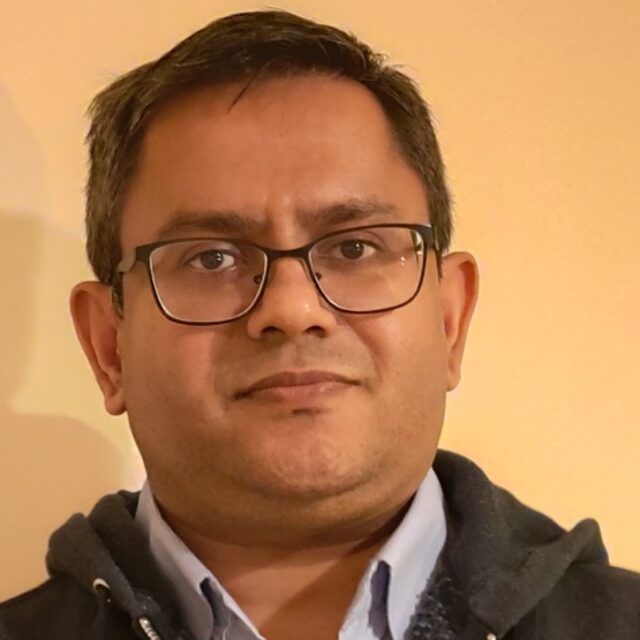
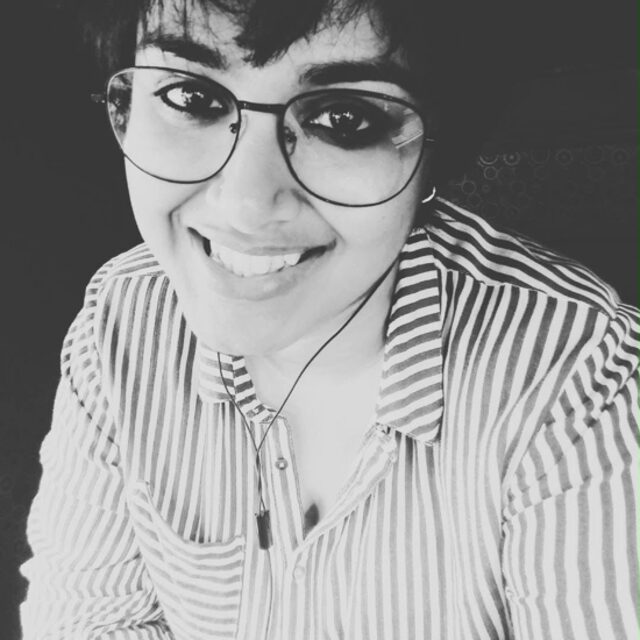
Portrait of Dr Debolina Dey

Dr Debolina Dey

Azim Premji University, Bhopal

Debolina currently teaches at Azim Premji University, Bhopal and has previously taught at Ramjas College and Lady Shriram College for Women. They have been a fellow at Max Planck Institute for the History of Science, Berlin and recently a Barker fellow at Durham University. They have also been a recipient of the Charles Wallace scholarship. Debolina’s research interests are divided between contemporary issues — digital cultures, queer lives — and historical aspects of literary culture, especially the 19th century. They also love all aspects of food: reading, writing, eating and cooking.

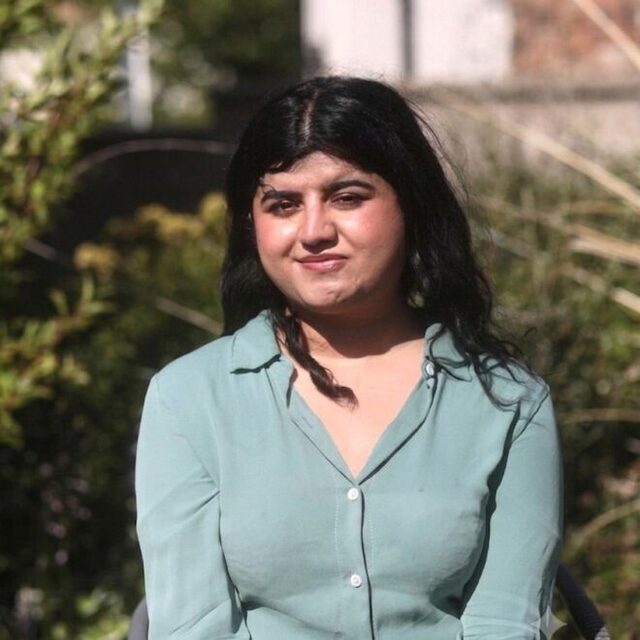
Portrait of Dr Maitrayee Roychoudhury

Dr Maitrayee Roychoudhury

ARSD College, University of Delhi

Maitrayee is an Assistant Professor in the Department of English, ARSD College, University of Delhi. She works on detective fiction and female sleuths from the global nineteenth century. Her PhD investigates a global framework for the New Woman detective across London, Melbourne, and Calcutta. Her upcoming publications explore Fergus Hume’s querying of race and empire in his Melbourne trilogy.

Shaped the history it is built on
Empire Veil
www.maitrayee.me →
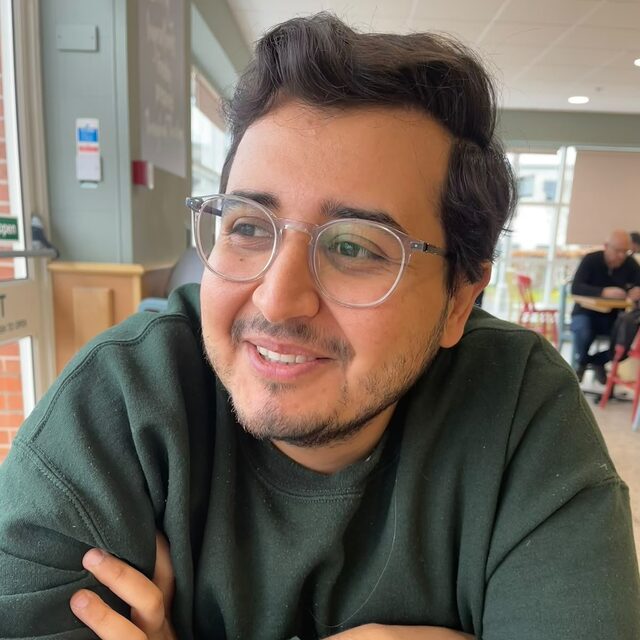
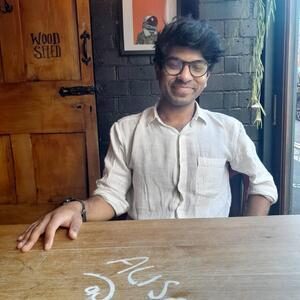
Portrait of Vaibhav Parel

Vaibhav Parel

Newcastle University

Vaibhav Parel is a Northern Bridge-AHRC funded PhD candidate at Newcastle University. His thesis, The Scene of the Crime: Nationhood and the Postcolonial Contemporary in South Asian Diasporic Crime Fiction, explores Anglophone diasporic crime fiction written by authors of Indian descent who are based in the Global North. In it, he argues that this fiction offers a double lens: firstly, it allows us to investigate how the uneven terrain of the nation-state, race, class, gender and caste in this contemporary global form is negotiated transnationally; and secondly, it pushes for a reassessment of the relationship of diasporic fiction with the shifting terrain of postcolonial Indian culture and society. He examines how this body of work challenges the paradigmatic frame of the nation and nationhood, and responds to questions of diasporic belonging and representation. He has previously published with Brill and in Literature, Critique and Empire Today.

Guest, episode 1
Empire Sleuths
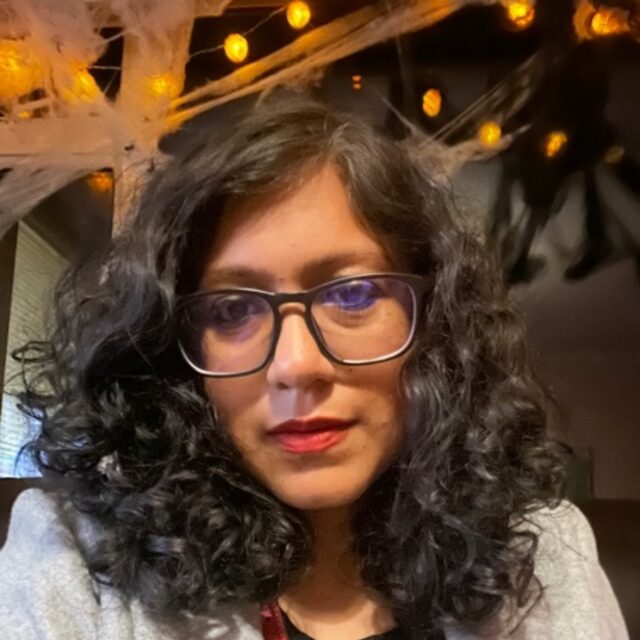
Portrait of Dr Zehra Kazmi

Dr Zehra Kazmi

Institute of Ismaili Studies

Dr Zehra Kazmi is a Research Associate in the South Asian Studies Unit of the Institute of Ismaili Studies and is a literary scholar specialising in modern South Asian Muslim literature and culture. Dr Kazmi is a literary historian of memory and affect, with a background in South Asian literatures, critical Muslim studies, postcolonial theory, and global modernisms. She was recently awarded a PhD in English from the University of St Andrews. Her thesis, which was passed without corrections, is titled “Indo-Muslim Nostalgia: Memory, Modernity and the Nation in 20th Century South Asian Muslim Writing”. It explores historical memory and nostalgia in South Asian Modernist Muslim writing within the context of sectarian violence and cultural disintegration in the wake of Partition. At the intersections of postcolonial theory, memory studies, affect theory, global modernisms, and decolonial feminist thought, she examines the works of South Asian Muslim and diasporic writers including Qurratulain Hyder, Ahmed Ali, Intizar Husain, Khadija Mastur, Attia Hosain, and M.G. Vassanji, among others. The study offers a rigorous analysis of the interconnections between Anglo-American and South Asian modernisms by tracing the emergence and trajectory of the latter in 20th century Indo-Muslim writing.
Portrait of Abdullah Alahmari

Abdullah Alahmari

University of St Andrews

Abdullah Alahmari is a PhD student at the University of St Andrews, in the School of Modern Languages. His research focuses on the literary representation of masculinity in the works of Egyptian author Yūsuf Idrīs, examining how masculinity is performed, portrayed, and neglected in Idrīs’s oeuvre. His thesis, titled ‘The Construction of Masculinity in the Works of Yūsuf Idrīs’, contributes to the broader fields of gender studies and Middle Eastern literary analysis. Abdullah holds an MLitt in Middle Eastern Literary Studies from the University of St Andrews.

Portrait of Dr Clara Défaschel

Dr Clara Défaschel

University of St Andrews

Dr Clara Défaschel is an Associate Lecturer at the School of Modern Languages at the University of St Andrews. She recently completed her AHRC-funded PhD in Comparative Literature, which explored literary translations from Arabic into French produced in Morocco, Algeria and Tunisia in the past decade. Her broader research interests include reading in translation, plural ‘Frenches’ and ‘Arabics’, North African fiction, material and print cultures, sociology of literature, postcolonial cultural policy and diplomacy.

Portrait of Dr Anushrut Ramakrishnan Agrwaal

Dr Anushrut Ramakrishnan Agrwaal

University of St Andrews

Dr Anushrut Ramakrishnan Agrwaal is a film and media historian. He is currently a Postdoctoral Research Fellow on the AHRC-DFG “Relocating Filmstrips, Remapping Europe” project, a collaboration between the University of St Andrews and Goethe-Universität Frankfurt am Main. His research interests include nineteenth and twentieth century British educational and visual culture, non-theatrical film and media, film technologies, science and cinema, colonial cinema, and media materiality. Anushrut’s current book project, Watch and Learn: How the Invention of Cinema Changed British Education, reveals how cinema’s invention in the 1890s had a transformative impact on British education. Building on his research, Anushrut works on the history of the filmstrip as an instructional and political media technology. He is currently also researching glass as a media object, examining what the material and metaphorical uses of glass in British screen media — film, television, digital media — reveal about the class hierarchies, colonial legacies, gender discriminations, and environmental degradations embedded within British visual culture. Anushrut is also a Fellow of the British Higher Education Academy, and the Book Review Editor at the journal Early Popular Visual Culture. He previously worked as an Associate Lecturer at St Andrews (2023–2025), and has delivered guest lectures and led seminars at other universities, including Goethe-Universität Frankfurt am Main in Germany, and Jamia Millia Islamia and St Stephen’s College in India.

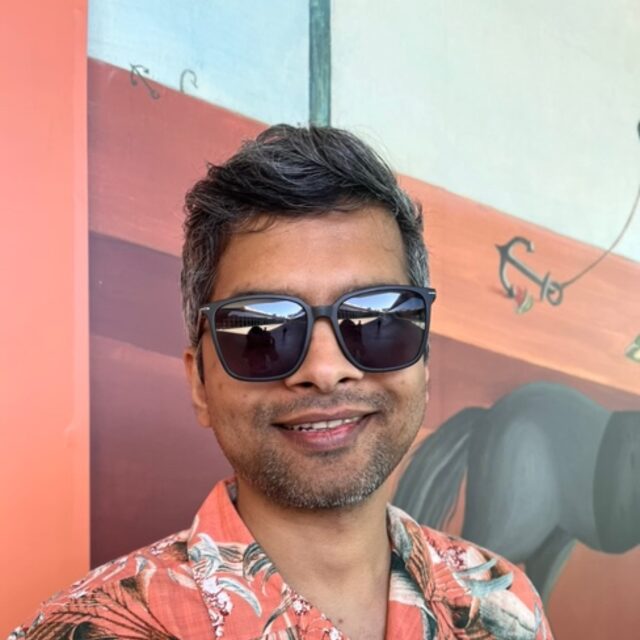
Portrait of Dipankar Sarkar

Dipankar Sarkar

Neul Labs

Dipankar is an independent researcher and CTO, and the founder of Neul Labs. He holds a B.Tech from IIT Delhi and an M.S. from Arizona State University, and is a member of the ACM and the IEEE. His research sits at the intersection of machine learning, distributed systems and decentralised technologies — federated learning and privacy-preserving AI, blockchain and decentralised physical infrastructure, deepfake detection, and copyright-compliant generative AI — and has produced a book, a body of published papers and more than twenty-five patent applications. Within the collective his interest is in digital infrastructures: what the pipelines, archives and platforms that now carry cultural memory inherit from the ones that came before. He builds the collective’s own, from the Empire Sleuths production pipeline to Empire Veil.

Built and maintains it
Empire Veil
www.dipankar.name →

The collective is growing

We are open to researchers whose work touches ours, to podcast guests, and to anyone who wants to help build the next artefact.

Join the collective